I'd failed at building a morning routine for three years straight. The 8-minute sessions felt too small to matter, but that's exactly why they worked. Missing a day didn't spiral into quitting because the next day was still just 8 minutes. Ninety days later, I have a routine that feels automatic, not forced.

John Taylor
David Park
I'd failed at building a morning routine for three years straight. The 8-minute sessions felt too small to matter, but that's exactly why they worked. Missing a day didn't spiral into quitting because the next day was still just 8 minutes. Ninety days later, I have a routine that feels automatic, not forced.
John Taylor
David Park
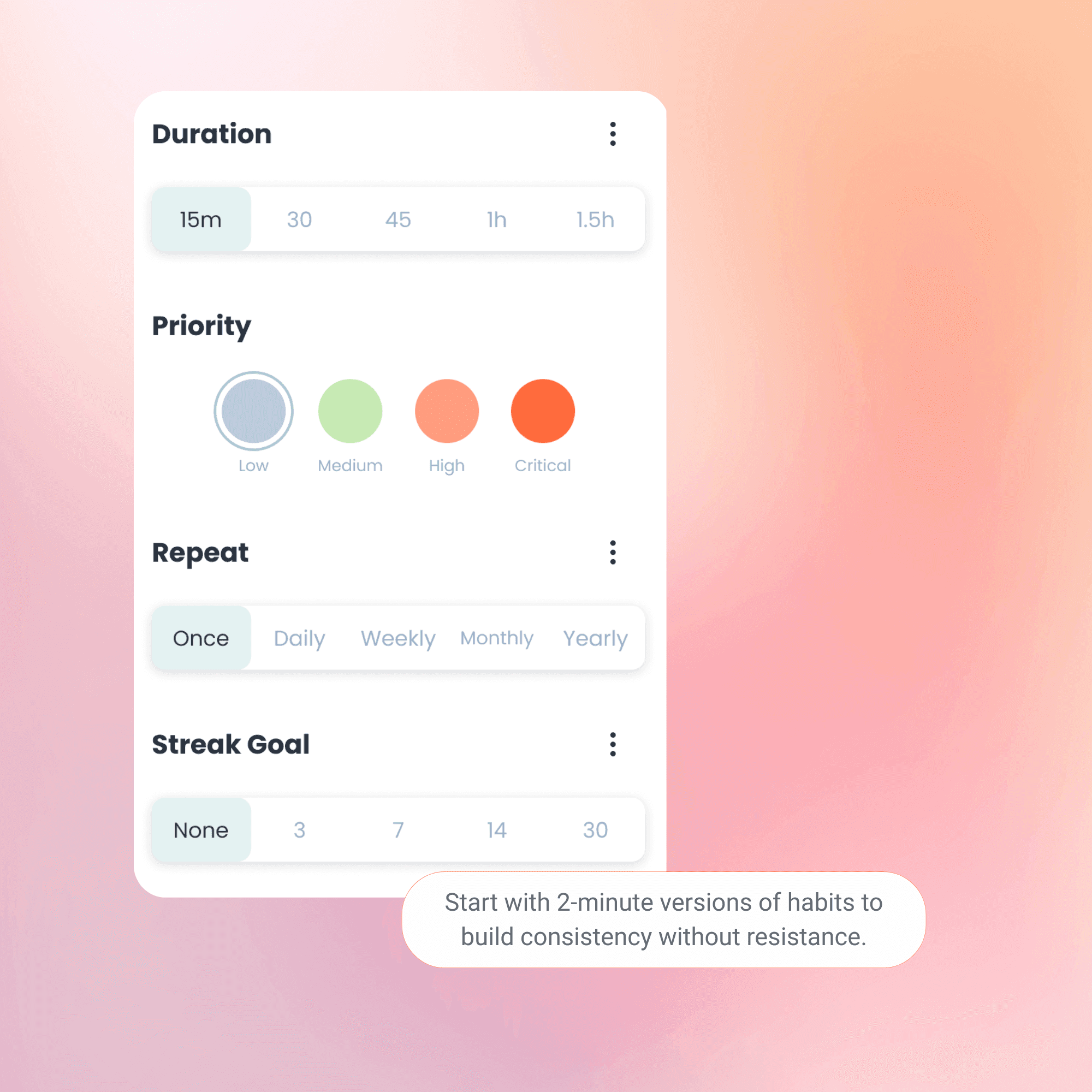
There's the person who misses one workout and quits for two months. And there's the person who misses one workout and just does the next one. This framework turns the first into the second. Not through superhuman discipline, but through starting so small that missing a day doesn't feel like total failure. When your commitment is 8 minutes, skipping once doesn't trigger the "I've ruined it, might as well quit" spiral. You just continue tomorrow. That shift from "restart Monday" to "continue tomorrow" is how habits actually stick. Imperfect consistency beats perfect intentions every time.
There's the person who misses one workout and quits for two months. And there's the person who misses one workout and just does the next one. This framework turns the first into the second. Not through superhuman discipline, but through starting so small that missing a day doesn't feel like total failure. When your commitment is 8 minutes, skipping once doesn't trigger the "I've ruined it, might as well quit" spiral. You just continue tomorrow. That shift from "restart Monday" to "continue tomorrow" is how habits actually stick. Imperfect consistency beats perfect intentions every time.
Anti-perfection design
That changes how you see yourself. You're not someone trying to build a habit anymore. You're just someone who works out, sometimes at 6 AM, sometimes at 9 PM, sometimes you miss a day. But you keep going. The habit isn't the perfect streak. The habit is continuing after you break it. That's the identity shift that actually sticks.
And here's the bonus: those 8 minutes naturally expand. Not because you force yourself, but because the habit made space for itself in your life. Week 1, 8 minutes feels likean achievement. Week 8, it feels like a warm-up. By Week 12, you're doing 20 minutes because you want to, not because you have to. The small start didn't limit you, it enabled you to begin. And beginning is the only thing that matters.
Anti-perfection design
That changes how you see yourself. You're not someone trying to build a habit anymore. You're just someone who works out, sometimes at 6 AM, sometimes at 9 PM, sometimes you miss a day. But you keep going. The habit isn't the perfect streak. The habit is continuing after you break it. That's the identity shift that actually sticks.
And here's the bonus: those 8 minutes naturally expand. Not because you force yourself, but because the habit made space for itself in your life. Week 1, 8 minutes feels likean achievement. Week 8, it feels like a warm-up. By Week 12, you're doing 20 minutes because you want to, not because you have to. The small start didn't limit you, it enabled you to begin. And beginning is the only thing that matters.
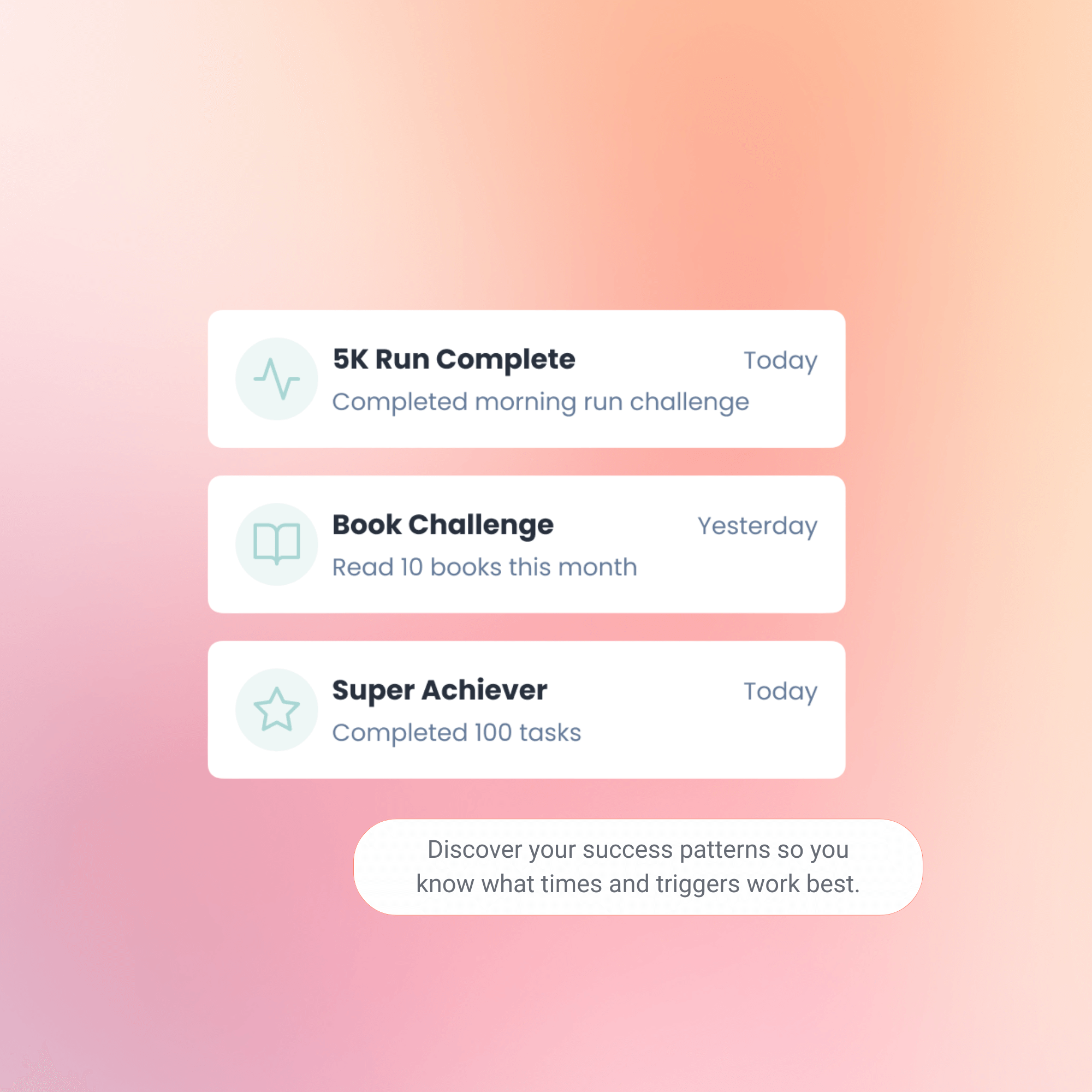
Micro-commitment psychology
The person who skips hour-long workouts has good reasons. Too busy, too tired, too stressed. All legitimate. The person who skips 8-minute workouts is just choosing not to. That's the difference. Eight minutes is too small to hide behind circumstances. You have it. You're just spending it elsewhere. That forces an honesty that bigger commitments don't: you're not a victim of your schedule. You're making a choice. And seeing it as a choice creates accountability. You can't change circumstances. You can change choices. That's where habits actually form.
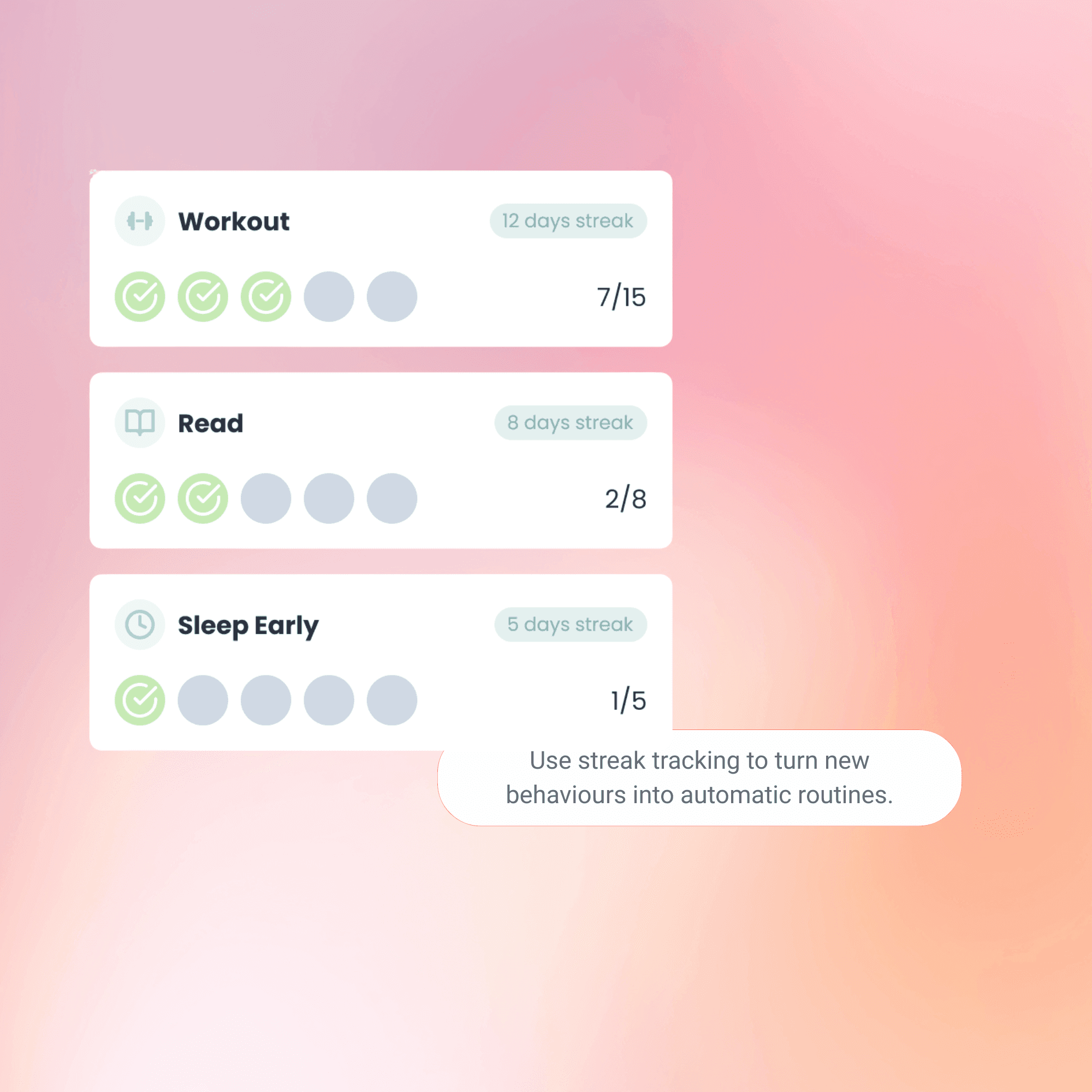
We made commitments absurdly small on purpose. Eight minutes. "That's it? Too easy." Perfect. Complete it easily, feel good, repeat. By Week 8, you're doing 15 or 20 minutes. Nobody forced that—the habit just stopped feeling like work. That's real motivation: built through small wins, not willpower against big commitments. Internal drive beats external pressure every time.
Micro-commitment psychology
The person who skips hour-long workouts has good reasons. Too busy, too tired, too stressed. All legitimate. The person who skips 8-minute workouts is just choosing not to. That's the difference. Eight minutes is too small to hide behind circumstances. You have it. You're just spending it elsewhere. That forces an honesty that bigger commitments don't: you're not a victim of your schedule. You're making a choice. And seeing it as a choice creates accountability. You can't change circumstances. You can change choices. That's where habits actually form.
We made commitments absurdly small on purpose. Eight minutes. "That's it? Too easy." Perfect. Complete it easily, feel good, repeat. By Week 8, you're doing 15 or 20 minutes. Nobody forced that—the habit just stopped feeling like work. That's real motivation: built through small wins, not willpower against big commitments. Internal drive beats external pressure every time.
Your flow state
ENTREPRENEURSHIP
BUSINESS LAUNCH
SIDE HUSTLE
Launch your business
Your idea could work but "start a business" feels impossible. So it sits while others launch. Tomorrow: "Interview one customer - 20 minutes." Not "validate your market." Not "build an MVP." One conversation. That's how it starts.

ENTREPRENEURSHIP
BUSINESS LAUNCH
SIDE HUSTLE
Launch your business
Your idea could work but "start a business" feels impossible. So it sits while others launch. Tomorrow: "Interview one customer - 20 minutes." Not "validate your market." Not "build an MVP." One conversation. That's how it starts.
SKILL BUILDING
LEARNING
CAREER GROWTH
Master new skills
15 minutes feels pointless. But 15 minutes for 60 days is 15 hours of practice. Enough to play songs, order coffee in Spanish without your palms sweating, or build working apps. Or wait for those perfect 2-hour blocks that never come.

SKILL BUILDING
LEARNING
CAREER GROWTH
Master new skills
15 minutes feels pointless. But 15 minutes for 60 days is 15 hours of practice. Enough to play songs, order coffee in Spanish without your palms sweating, or build working apps. Or wait for those perfect 2-hour blocks that never come.
Your flow state
ENTREPRENEURSHIP
BUSINESS LAUNCH
SIDE HUSTLE
Launch your business
Your idea could work but "start a business" feels impossible. So it sits while others launch. Tomorrow: "Interview one customer - 20 minutes." Not "validate your market." Not "build an MVP." One conversation. That's how it starts.
SKILL BUILDING
LEARNING
CAREER GROWTH
Master new skills
15 minutes feels pointless. But 15 minutes for 60 days is 15 hours of practice. Enough to play songs, order coffee in Spanish without your palms sweating, or build working apps. Or wait for those perfect 2-hour blocks that never come.